 My overview




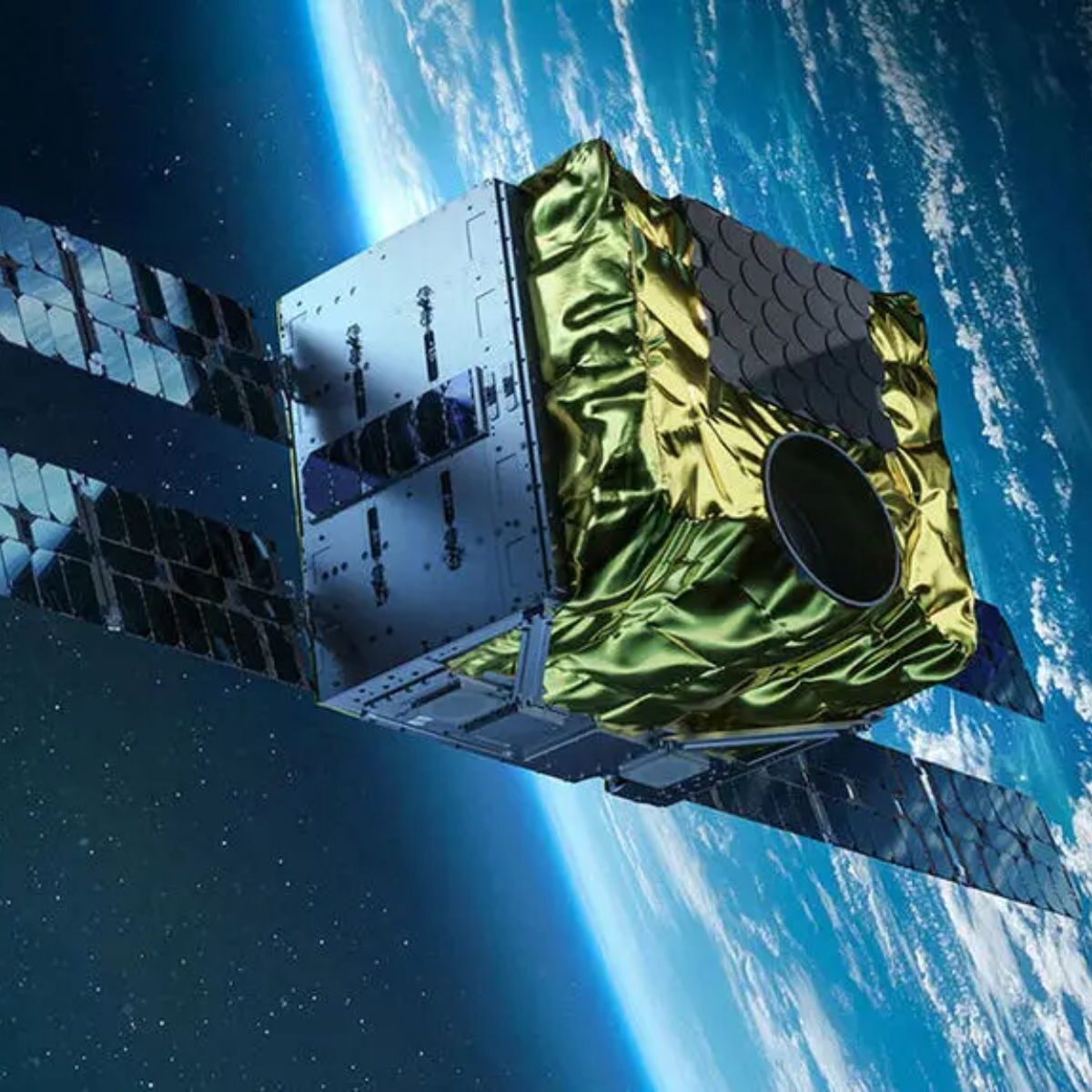
With support from Innovation Fund Denmark, a new Danish-led space project will develop a far cheaper European solution for power supply in small satellites. With SATSOL, the partners will bring tailored solar cell technology from Earth into space, aiming for high performance, lower costs and greater European security of supply.
Small satellites are playing an increasingly important role in communications, Earth observation, research, security and climate monitoring. However, their power supply today is often based on expensive and supply-critical GaAs solar cells. The new SATSOL project will develop a European, more scalable and significantly cheaper solution based on crystalline silicon solar cells, further developed for use in space.
The project, which has just held its kick-off, brings together companies and research environments to develop the next generation of solar module solutions for small satellites. The aim is to create a solution that can significantly reduce costs while strengthening Danish and European capacity in critical space technology. Innovation Fund Denmark is investing DKK 15 million in the project.
Established solar cell technology adapted for space
SATSOL is based on a clear technological concept. The project takes commercially available silicon solar cells as its starting point and further develops them for use under the special conditions in space. This includes, among other things, adaptation to the light conditions in space, durability testing under vacuum, temperature fluctuations, radiation and UV exposure, as well as the development of encapsulation and module design suitable for small satellites.
“With SATSOL, we will demonstrate that mature and scalable solar technologies from Earth can be used to create a competitive solution for space. This can make power supply for small satellites far more accessible while strengthening Danish and European technology development,” says Simon Lennart Sahlin, METR ApS.
The project is also working on an intermediate layer based on quantum dots, which in the longer term can improve the solar cells’ utilisation of light in space. Overall, this will advance the technology towards a validated prototype and provide the basis for later commercialisation and integration into microsatellite platforms.
Greater European resilience in space
The perspective is both industrial and societal. If successful, SATSOL can make it cheaper to deploy small satellites and thereby strengthen access to solutions in climate monitoring, communications, security and research. At the same time, the project will help build a European value chain for space solar cells and reduce dependence on suppliers outside Europe and NATO.
For Denmark, the project could be a step towards a stronger position in the growing European space economy. The ambition is to link research, industrial scale-up and satellite integration in one coherent development effort, with the potential for new jobs, exports and technological sovereignty.
Strong partnership from research to satellite
Behind SATSOL is a consortium that covers the entire chain from research to production and application. METR leads the project and will drive project management, industrialisation and scale-up. DTU contributes research, material screening, testing and the development of modules and quantum dot solutions. Nice Visions works on requirements specification, market dialogue and commercialisation. GOMSpace contributes as a key integration partner and end user, ensuring that the developed solutions can be integrated into microsatellite platforms and later demonstrated in a realistic space context.
The combination of research expertise, industrial development and access to the international space ecosystem will help ensure that the project not only develops new technology, but also brings it closer to real-world application.
“We will demonstrate that solar technologies can be used to create a competitive solution for space.”
Simon Lennart Sahlin
Facts
- Innovation Fund Denmark’s investment: DKK 15 million
- Total budget: DKK 18.8 million
- Duration: 3 years
- Project start: 1 April 2026
- Official title: Low-cost PV cells for space usage (SATSOL)
About the partners
METR ApS is the project lead and works on project management, industrialisation, production transfer and scale-up of the new solar modules.
DTU contributes research and testing in solar cells, materials, modules, quantum dots and environmental impacts relevant to space use.
Nice Visions contributes market insight, requirements specification, business development and commercialisation.
GOMSpace A/S contributes as an integration partner with expertise in microsatellites, integration requirements and use in operational satellite platforms.