 My overview





Internationale forsknings- og innovationsprojekter
Innovation Fund Denmark’s International Collaborations programme invests in Danish stakeholders’ participation in international research and innovation projects. The programme is characterised by Innovation Fund Denmark co-funding projects with other national funders in a Nordic, European or global context, giving Danish stakeholders access to international collaboration and joint investments.
See whether International Collaborations is right for you
Our investments in figures
All figures are from 2025
Available calls
Showing 14 results
Chips JU RIA Resilience 2026 – research-oriented call on 6G front-end modules
7 JUL 2026
16 SEP 2026 kl. 17.00
ECS IA Resilience 2026 – market-oriented call on photonics
7 JUL 2026
16 SEP 2026 kl. 17.00
ECS IA Resilience 2026 – market-oriented call for proposals on power electronics
7 JUL 2026
16 SEP 2026 kl. 17.00
CHIPS JU IA Resilience 2026 – market-oriented call on health technologies
7 JUL 2026
16 SEP 2026 kl. 17.00
International collaboration on research in quantum technology
27 JUL 2026
24 SEP 2026 kl. 20.00
Pre-announcement: Sustainable Water Management Call 2026
8 SEP 2026
10 NOV 2026 kl. 15.00
Showing 8 of 14 items
From application to project
-
How you apply depends on the programme, but it typically takes place in two steps:
- First, you submit your application to the international programme together with your partners
- After that, Danish participants will be invited to submit information to Innovation Fund Denmark via e-grant
It is important to follow the guidance in the specific funding opportunity, as the process may vary from programme to programme.
-
What your application should include depends on the international programme.
Typically, in addition to the application to the international secretariat, you must submit the following to Innovation Fund Denmark via e-grant:
- The international application (incl. budget)
- Relevant declarations.
Guidelines and documents
Declarations
When applying for funding for an international project with Innovation Fund Denmark, a number of additional supporting documents are required.
-
Declaration that the organisation does not have the status of an undertaking in difficulty. This is a requirement for all applications from non-public companies and organisations.
-
All non-public organisations must, by using this form, declare that they have the necessary financial capacity to participate in the project applied for, and that there are no legal circumstances that disqualify them
-
Declaration that the small or medium-sized enterprise (SME) meets the criteria for an SME. This is a requirement for all applications from an SME.
-
As an alternative to investment rates under the state aid rules, Danish SMEs may choose to be funded under the European Commission’s de minimis Regulation. If applied, the maximum investment for the SME over a three-year period is €300,000. Salary is calculated based on a fixed hourly rate of DKK 750 (approx. €100) per hour. This form is a requirement for applicants who wish to apply under the de minimis rules. Note: special rules apply to companies within primary production of agri- and aquaculture products.
-
There is no mandatory template for the Gantt chart, but the chart must meet the requirements described in the guidance. This is a requirement for all funded projects.
Frequently asked questions
-
Answer: No, there is still a maximum funding amount of EUR 300,000 per partner. However, it is correct that the total funding amount for Danish partners must be equal to or lower than EUR 500,000. This means that one partner can receive a maximum of EUR 300,000, and the other up to EUR 200,000. Also note that the maximum funding rates that apply to the specific types of organisations still apply.
-
Answer: Yes, specific overhead is included in the maximum funding from Innovation Fund Denmark, both in the maximum funding amount and the maximum funding rate. You can find the specific overhead rates that apply to your organisation in our guidelines. However, some types of organisations (e.g., regions and municipalities) do not receive overhead.
-
Answer: The funding rate (also called the investment rate) is calculated by dividing the requested funding amount by the total budgeted costs for a single partner. This means that the total budgeted costs for a partner are the sum of the requested funding amount and the partner’s own contribution to the budget.
-
Answer: No. You are expected to contribute partially to your project activities. For example, if the maximum funding rate for your organisation is 75%, you must contribute at least 25% to your own budget. If your funding request corresponds to a funding rate of 100%, your application will be considered ineligible.
If you apply for the maximum funding of EUR 300,000 and the funding rate is 75%, your organisation must contribute EUR 100,000. If you apply for the maximum funding of EUR 300,000 and are from a university where the funding rate is 90%, the university must contribute a minimum of EUR 33,333.
-
Answer: Yes. But you are expected to participate in all projects that are selected for funding.
-
Answer: Yes. You will receive an invitation from Innovation Fund Denmark with further instructions on uploading your application to e-grant. This typically happens 2–4 weeks after the application deadline.
-
Answer: No. Funding opportunities can be one-step (one-step) or two-step (two-steps). A two-steps funding opportunity will request a pre-proposal and a full proposal. A one-step funding opportunity will only request a full proposal. In addition, a funding opportunity may request a letter of intent at an early stage, but it is not the same as a pre-proposal.
-
Answer: You must submit the tasks “Consortium agreement” and “Acceptance of grant” as soon as possible. The latter task will set up the other E-grant tasks for the project. After that, progress reports and accounts must be submitted semi-annually. However, SMEs may request to report accounts quarterly. In addition, an audit statement must be submitted annually.
-
Answer: Organisations under the Danish National Audit Office must report ‘Appendix 5’, which is completed by the person responsible for finances. All other organisations must submit an independent audit statement prepared by an external state-authorised public accountant. Annual reports or management statements are not sufficient.
Contact
Daniel Green Blok Marques
Program Officer, International & Missions
Katrine Boeriis
Program Officer, International & Missions

Mathias Holm Tveen
Program Officer, International & Missions

Rebecca Stiig Vibæk
Program Officer, International & Missions
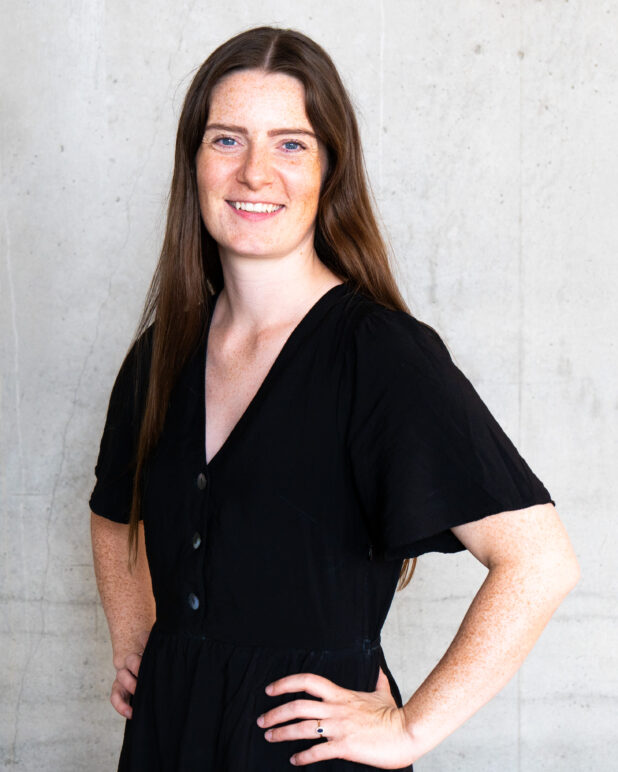
Stine Bach Holm
Program Officer, International & Missions (parental leave)