 My overview



How can we ensure the best possible treatment for children with serious infections without unnecessary hospital admissions and without contributing to antibiotic resistance? That question has been at the heart of the groundbreaking research project Child@Home – one of the largest paediatric research collaborations in recent years.
The project is led by Professor and Consultant Paediatrician Ulrikka Nygaard and has received investment from Innovation Fund Denmark’s Grand Solutions programme.
The Child@Home research project has already made headlines in leading journals, including The Lancet – Infectious Diseases and The Lancet – Child and Adolescent Health, and the healthcare system has also changed treatment procedures based on the project’s results. In many ways, Child@Home is a major project with important results, leading to less overtreatment and better, gentler care for children with infectious diseases.
A nationwide collaboration
All 18 paediatric departments in Denmark have taken part in the project, making it one of the largest paediatric research collaborations in recent years. The patients in the project are children admitted with infectious diseases, and the aim has been to develop new diagnostic methods and gentler antibiotic treatments so children can return home to their families sooner. The project is also anchored in CAG CHILD (Clinical Academic Group CHILD), where basic research is combined with clinical research.
“Funding from Grand Solutions has made it possible to join forces across the country, establish a national research platform and deliver results that change the treatment of children – both in Denmark and internationally,” Ulrikka Nygaard emphasises.
A core focus of Child@Home has been, first, to examine whether more children can be treated at home and, second, to avoid overtreatment with antibiotics, which increases the risk of antibiotic resistance. The results from Child@Home therefore align with a strategic collaboration between the umbrella organisations Danish Medical Societies and Danish Patients called “Choose Wisely”, which focuses on areas in the Danish healthcare system where unnecessary tests, treatments or procedures are carried out. It is estimated that 20–30% of tests, treatments and procedures in the healthcare system are unnecessary.
Among other things, Child@Home has examined whether antibiotics can be given as tablets instead of intravenously.
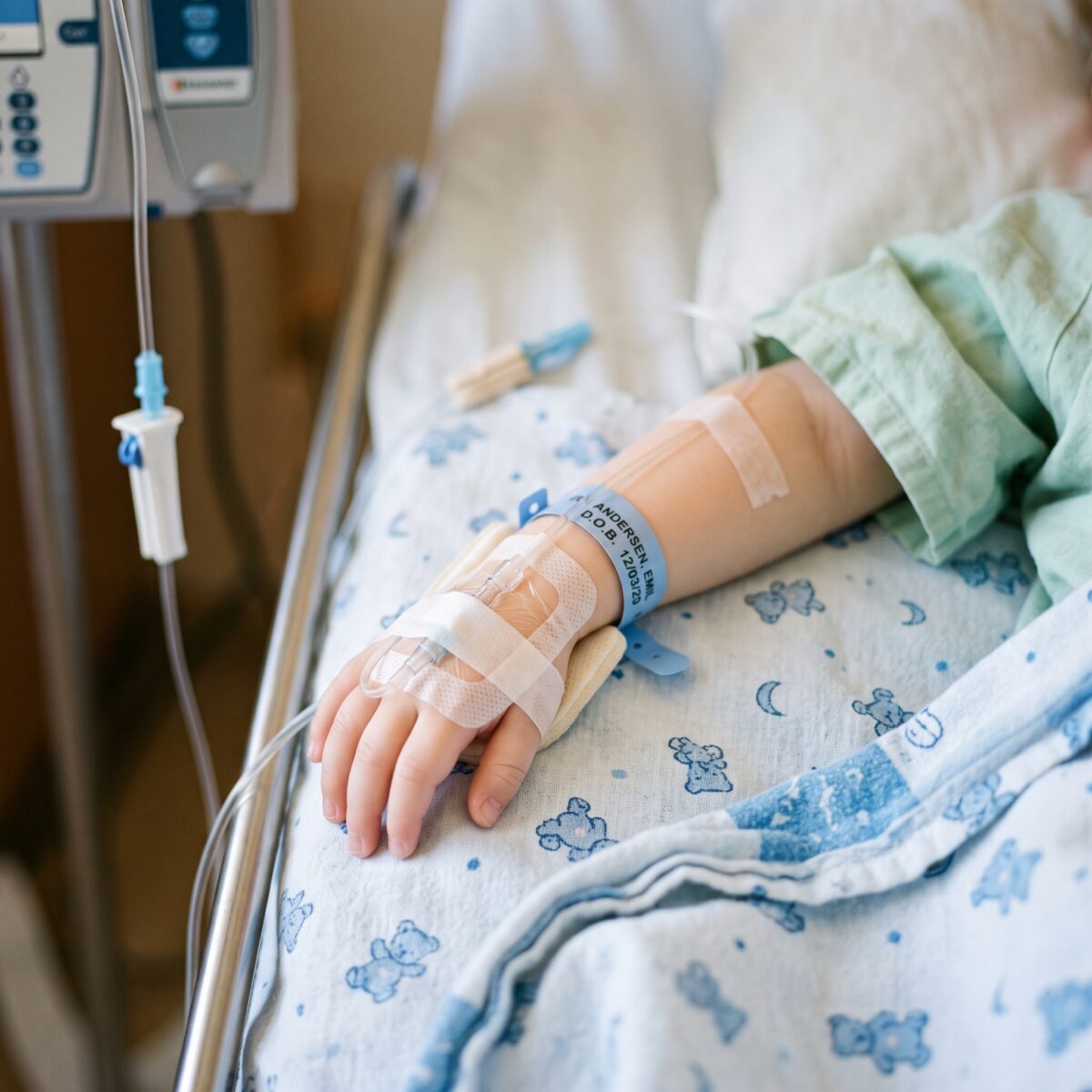
“For children, intravenous antibiotic treatment means they have to be admitted, we often have to hold them still when inserting an IV line, and the line has to be replaced – sometimes under general anaesthesia. It is a burden for both the child and the healthcare system,” Ulrikka Nygaard explains.
Individualised treatment delivers better results
Across the Child@Home studies, the shared aim has been to examine whether individualised antibiotic treatment can be offered instead of all children receiving a standardised, prolonged course. In practice, this means, for example, that children with bone and joint infections who previously always received an initial standard treatment with intravenous antibiotics, regardless of how ill they were, can now in most cases receive tablet treatment at home.
“In one of our studies, a randomised trial showed that initial treatment with tablets was just as safe as intravenous treatment for children with uncomplicated bone and joint infections. It is the first study in the world to examine this, and it has attracted significant international attention,” says Ulrikka Nygaard.
Child@Home has also examined an individualised approach to antibiotic treatment, tailored to each child based on how quickly they recover—for children with pyelonephritis, newborns with signs of sepsis, and infections in children with cancer. The individualised treatment has proven better at ensuring antibiotics are not overused, and it is less burdensome for the child.
Treatment at home
Child@Home represents a significant shift in treatment strategy: from routine, prolonged intravenous treatment in hospital to more targeted, shorter and often oral treatment at home.
“When the child is at home, they can play, be with their siblings and recover faster. At the same time, we spare the healthcare system hospital admissions and burdensome procedures such as IV insertion and anaesthesia,” says Ulrikka Nygaard.
Fact box
A major pillar of Child@Home is Innovative Antibiotic Use, in which researchers have conducted four randomised clinical trials:
- WP3 – Bone and joint infections: Demonstrated that tablet treatment is just as safe as intravenous treatment for uncomplicated infections. The result has already changed Danish guidelines.
- WP4 – Urinary tract infections: Showed that individualised treatment (stop three days after the child has recovered) can halve treatment duration compared with the 10-day standard—without increased risk.
- WP5 – Sepsis in newborns: Examines whether shorter, more tailored treatment can be as effective as longer standard courses.
- WP6 – Febrile neutropenia (children undergoing cancer treatment): Tests individualised treatment against standardised, longer antibiotic courses.