 My overview



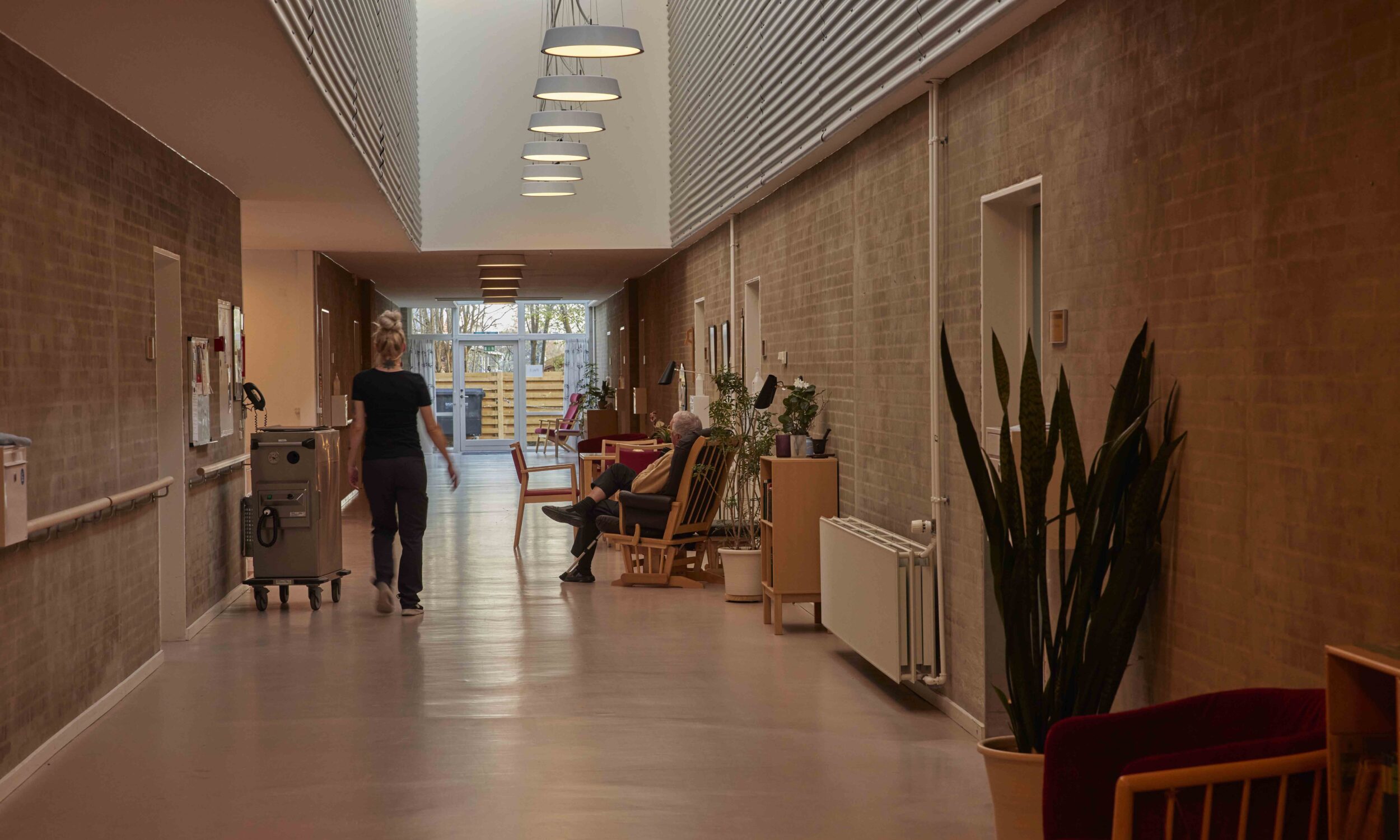
Many older people and patients spend most of the day indoors. That is why Chromaviso has developed circadian lighting that brings nature’s rhythm into the living rooms of care homes and hospitals. With funding from, among others, Innovation Fund Denmark, the technology behind the circadian lighting has been studied and further developed so it can make a difference in more parts of the healthcare sector.
The human body is designed to follow the light outdoors. When the sun rises, the light helps us wake up and gain energy, and when darkness falls, the body receives a signal that it should settle down.
However, this is not what everyday life looks like for many patients and older citizens. In care homes and hospitals, many spend most of the day indoors, where the light is often the same in the morning, at midday and in the evening.
That is why the Danish company Chromaviso has developed circadian lighting that changes in step with the day. The light mimics a sunny day in May, shifting from bright and cool during the day to warm and dim in the evening.
More calm and a better working environment
Over several years, Chromaviso’s circadian lighting has been studied in research projects and tested in the healthcare sector, with a focus on gathering new knowledge about how circadian lighting can be used and developed in practice. Innovation Fund Denmark has invested a total of DKK 2.7 million in the research, including through an Industrial PhD project from 2019–2023 and an international project from 2022–2024.
In addition to being studied in research projects, Chromaviso’s circadian lighting is now used in several care homes in Scandinavia, where it forms part of daily care and treatment.
In care homes, experience in particular indicates that the light can create greater calm and better sleep among residents. According to Chromaviso, feedback from specific installations shows that in some cases circadian lighting can reduce outwardly aggressive behaviour among residents with dementia by up to 71%.
At the same time, experience shows that the light can also affect the staff’s working environment, especially on evening and night shifts.
“The light has made a difference for some of our employees. Among other things, they experience more energy and fewer headaches with the circadian lighting. Evening and night shift staff also say they find it easier to fall asleep when they get home,” says Gitte Ellekilde Andersen, manager of the Bauneparken care home in Hillerød.
The circadian lighting has also been shown to affect the number of sick days among staff at the care homes. A user survey from a care home in Odense showed a reduction in sickness absence of up to 21% after the care home had circadian lighting installed.
A solution that must be usable in more places
Research into the effect and implementation of the circadian lighting has continuously contributed to further developing Chromaviso’s technology. In an international project supported by Innovation Fund Denmark, the light was tested in 16 apartments at a care home in Hillerød, where the aim was to make the solution more personal and tailored to each resident.
At the same time, the company has worked to make the technology easier to adopt, so the circadian lighting can be rolled out more widely.
“Our mission is to get circadian lighting into as many places as possible, because it delivers broad benefits. That is why we have worked to simplify the products and make them cheaper, so more people can access them. Our newest product can be plugged directly into a wall socket, and then you have circadian lighting,” says Sten Hatting Søgaard.
In the longer term, Chromaviso sees potential in bringing circadian lighting into private homes. Here, the technology can also support the circadian rhythm and perhaps help more older people remain in their own homes for longer.
Fakta
- Chromaviso’s circadian lighting recreates the beneficial effects of natural light.
- The light supports the body’s circadian rhythm by providing more energy during the day and creating calm in the evening and at night.
- The solution is used at more than 130 hospitals, psychiatric departments and care homes across Scandinavia.
Investments from Innovation Fund Denmark’s programmes:
- International collaborations (2022–2024): DKK 1.6 million
- Industrial researcher (2019–2023): DKK 1.1 million