 My overview



The ANTENNA project, involving Danish, Spanish, Greek, Irish, Dutch and German partners, will help rescue threatened populations of pollinating insects. Using new monitoring methods, the project partners will make it easier to collect data on the insects, thereby gaining knowledge about which species populations are under particular pressure and why. Innovationsfonden is investing DKK 2.25 million in the project’s Danish partners.
Insects are declining sharply worldwide, and that is bad news for the basis of human food production, which to a large extent depends on insects’ ability to pollinate plants. However, the trend is complex and leaves a host of unanswered questions.
According to Assistant Professor Quentin Geissmann at the Center for Quantitative Genetics and Genomics Research at Aarhus University, it is therefore crucial to find answers to these questions in order to reverse the decline in insects.
“Although insect numbers are generally declining, some species are doing better than others, and we do not have a complete overview of which are hardest hit. Nor do we have a complete overview of how changes in climate and the environment are driving the decline in insect numbers. That is why it is important to collect large amounts of data,” he says.
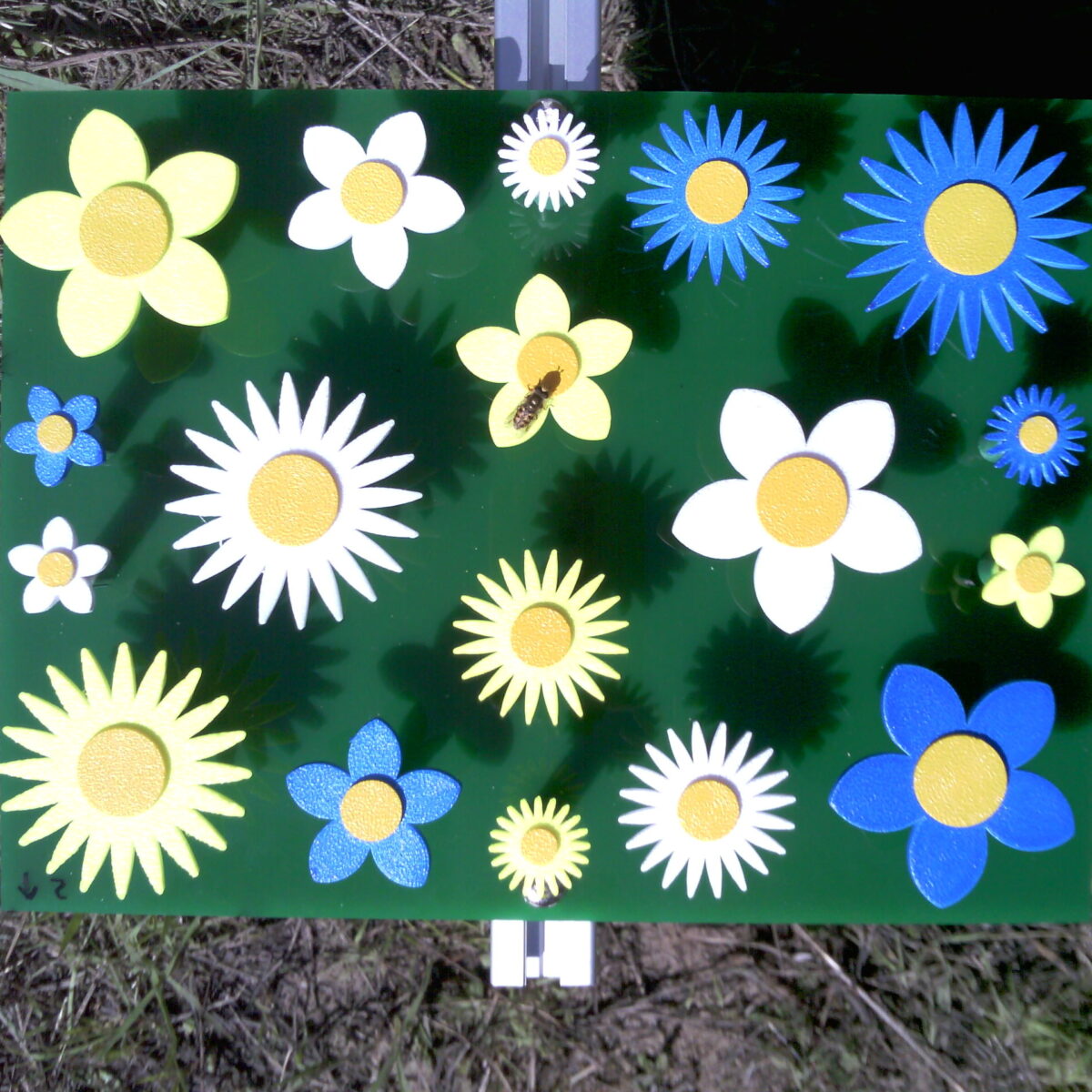
A large-scale European project has just been launched to collect these data. The project, called ANTENNA, will streamline, standardise and scale the way so-called pollinators are monitored. Quentin Geissmann, Aarhus University’s project lead on ANTENNA, believes that research in the field has so far suffered from outdated and cumbersome methods. Many of the traps previously used to collect insects killed them and also required frequent inspection and emptying. In ANTENNA, they have therefore developed a 3D-printed flower with an associated camera trap that is automatically triggered when an insect lands on the flower.
“This setup is easier to scale up at a European level, because with a purely mechanical model you do not need to take local conditions into account and can standardise and automate monitoring across national borders,” Quentin Geissmann explains.
In addition to the camera traps, the project partners also use various types of advanced technology to collect data on pollinators. At Aarhus University, they can run large quantities of collected insects through scanners that can provide a good estimate of the number of pollinators in a given habitat. To build a more detailed picture of exactly which species are involved, they send the same insects to Naturalis Biodiversity Center in the Netherlands, which specialises in DNA analysis of insects. In this way, the project partners leverage each other’s strengths in the collaboration.
According to Quentin Geissmann, projects such as ANTENNA play an important role in preventing the worst conceivable outcomes of a collapse in insect populations.
“Without pollinators, flowering plants—and therefore also their fruits—will die out. Plants that reproduce in other ways, on the other hand, will thrive, and we will experience a huge environmental upheaval that we as a society are not equipped to handle. To maintain stability in our ecosystem and come to the rescue of pollinators, we need to become better informed about the current state of insect populations.”
ANTENNA originated from a call under the EU initiative Biodiversa, which aims to promote biodiversity in Europe. At Aarhus University, Quentin Geissmann, who is himself a tenure-track Assistant Professor, is working with his postdoc Helena Russello on the ANTENNA project. In addition to Aarhus University, which is supported by Innovationsfonden, universities and research institutions from Ireland, Spain, Greece, the Netherlands and Germany are also involved.
“To maintain stability in our ecosystem, we need to become better informed about the current state of insect populations.”
Quentin Geissmann
Facts
- Innovation Fund Denmark’s investment: DKK 2,250,000
- Total budget: DKK 11,911,553
- Duration: 2023–2027
- Programme: International Collaborations – Biodiversa
- Official title: ANTENNA – mAkiNg TEchnology work for moNitoring polliNAtors
About the partners
Trinity College Dublin, Universidad Politécnica de Madrid, University of the Aegean, The Spanish National Research Council, Aarhus University, Naturalis Biodiversity Center, Helmholtz Centre for Environmental Research